Smart Homes,smarter risks.
A dissertation on predictive AI, security and the price of convenience.
We invited AI into our homes, gave it our voices, our routines, and our lives — but nobody asked whether it was safe.
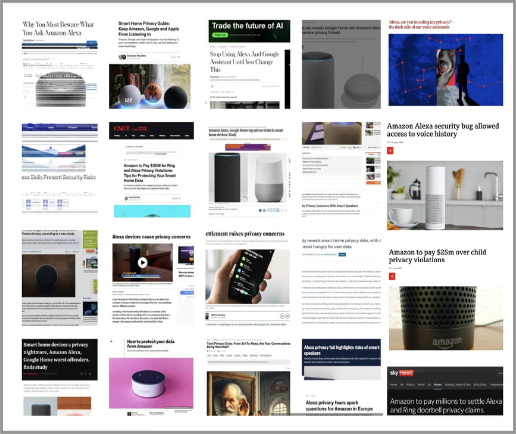
I explored the uncomfortable truth at the heart of smart home technology: how does our growing reliance on predictive AI create security vulnerabilities?
Through research on Alexa, Google Nest, literature reviews and real-world incidents, I mapped the vulnerabilities that human-AI interdependence creates — and uncovered a pattern: the more convenient AI makes our lives, the more autonomy we surrender, and the more exposed we become.
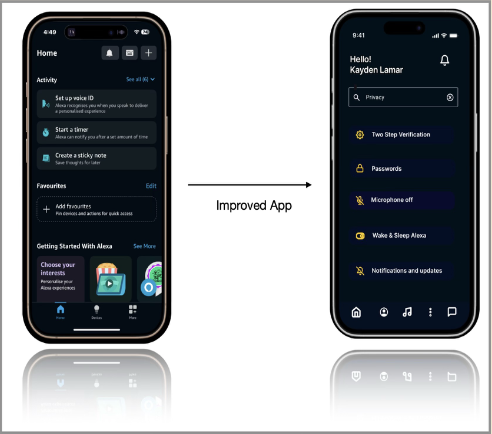
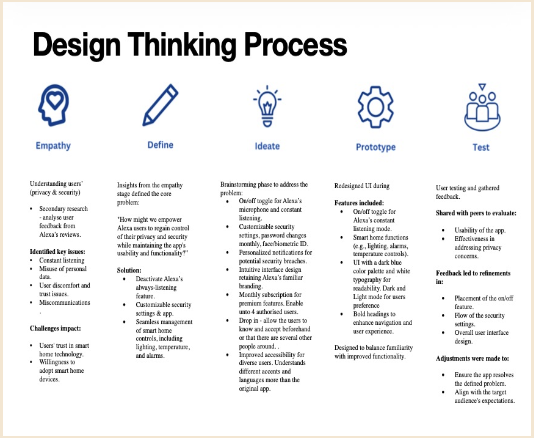
Most dissertations end at the conclusion. Mine ended with a Figma prototype.
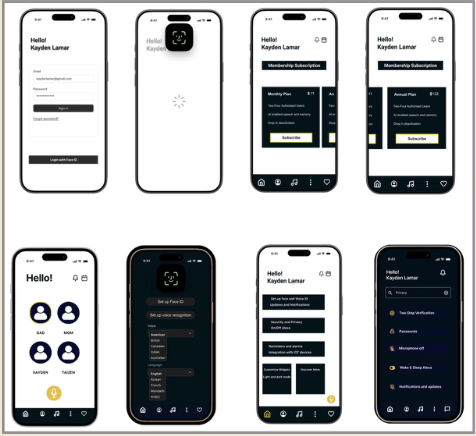
A Figma-prototyped app that puts privacy, security and user control back at the centre. Every feature traced directly to a vulnerability the research uncovered — Face ID authorisation, microphone control, multi-user profiles, customisable privacy settings. Not assumptions. Not guesswork. Design decisions backed by evidence. This wasn't redesign for aesthetics — it was redesign for trust.
- —Original framework for resident-facing AI smart-home security.
- —Working Figma prototype validated through user testing.
- —Submitted as UAL dissertation, 2024 — 2025.